

Nadiem Makarim: I did not develop Gojek to make myself rich
Jakarta, Thekabarnews.com – Nadiem Makarim took the stand on January 5, 2026. He was not there as a tech visionary or reform-minded minister; he was there as a defendant in a corruption case...

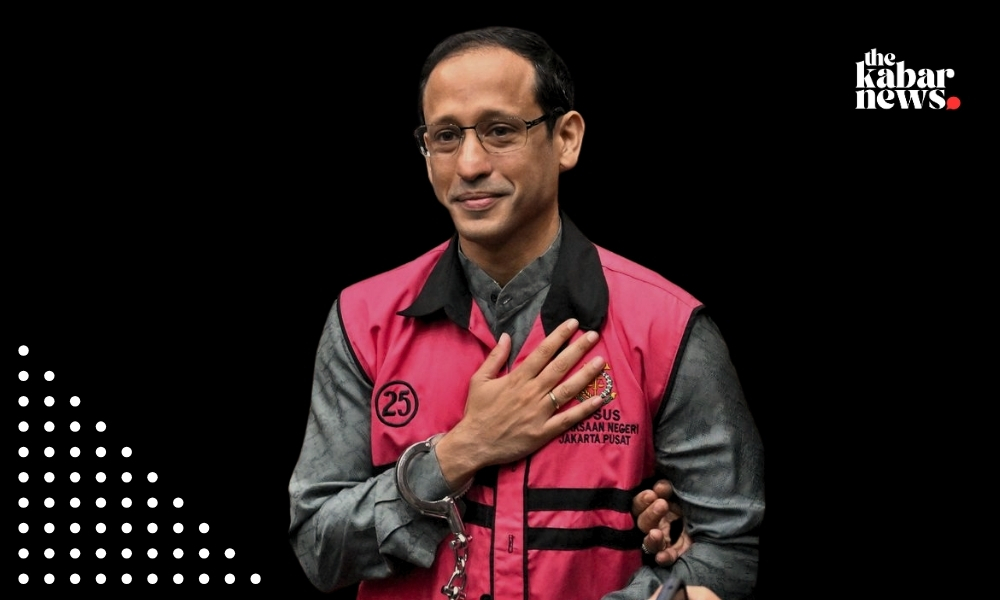
Jakarta, Thekabarnews.com – Nadiem Makarim took the stand on January 5, 2026. He was not there as a tech visionary or reform-minded minister; he was there as a defendant in a corruption case related to the Chromebook procurement program while he was Indonesia Minister of Education, Culture, Research, and Technology. But in his personal defense of the charges, he did more than just defend himself in court. He told a very human story about struggle, values, and calm determination.
Nadiem told the court, “I did not develop Gojek to make myself rich.” He remembered the early days of the company when he went to hundreds of ojek (motorcycle taxi) stations with only cigarettes and cups of coffee, seeking to convince drivers to trust a different approach to make money. People scoffed at him, doubted him, and even made fun of him. But he kept going.
Years later, Gojek would become a national force, helping well over three million Indonesians, from drivers to small business owners. Nadiem never saw it as just a business; it was a social movement.
Table Of Content
From Business to Public Service
Nadiem’s path did not end with starting his own business. He said that his parents had always reminded him that success means nothing without helping others. That idea guided him when President Joko Widodo asked him to join his administration.
Despite friends and coworkers warning him that he might face political attacks and damage his reputation, Nadiem agreed. He did not want to become the Minister of Education, Culture, Research, and Technology for the sake of power; he accepted the position because he believed the country needed his help. He said, “I could not ignore the problems in our schools.”
His goal was to bring about a digital transformation in education
Nadiem said that President Jokowi himself pushed for the digitization of education. This was part of his ambition to move Indonesia’s schools into the digital age. He hired tech experts to work for the government, established digital platforms, and pushed for significant changes.
In court, he said that more than 2 million teachers downloaded Merdeka Mengajar for free training.
- 1 million contract teachers became civil servants.
- The government hired 100,000 teachers online.
- University students found internships in Indonesia and other countries through Kampus Merdeka.
He stressed that technology infrastructure—like laptops, projectors, and Wi-Fi routers—played a crucial role in driving these changes, especially during the two years schools closed due to the pandemic.
The court is now challenging both the charges and the name he mentioned. The state blames Nadiem for causing Rp 2.1 trillion in damages through the Chromebook procurement scheme. He used the name of President Jokowi in his defense, not as a shield but as a reminder of the initial vision that motivated his work.
He said the changes were for a country that needed to change, not for his own benefit.
A man in a tough spot
Nadiem Makarim was no longer a startup darling or a policy innovator in court. He was a guy going through the hardest test of his public life, carrying both the burden of being accused and the memory of a goal he believed in.
Nadiem stood up again, like he did in the early days at the ojek stands, seeking to convince a throng that was not sure he was being honest this time. He spoke with quiet confidence again, hoping that this time he would be heard.







No Comment! Be the first one.