

From his bedroom, William Gadoury used satellites to track a Mayan city
Thekabarnews.com—William Gadoury was a teenager when his curiosity took him to locations outside of school. Many of William’s classmates concentrated on their studies. However, William devoted...

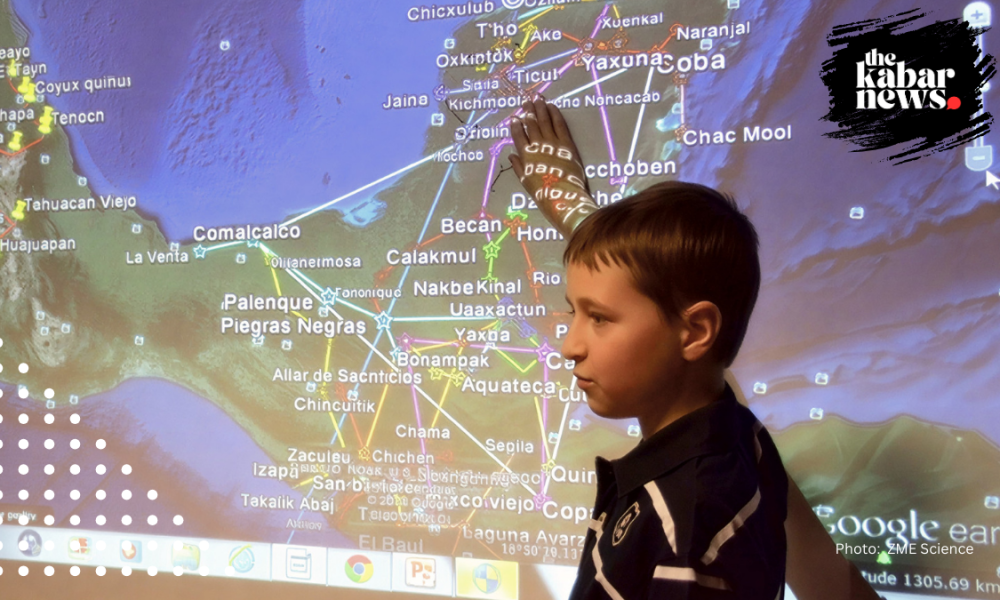
Thekabarnews.com—William Gadoury was a teenager when his curiosity took him to locations outside of school. Many of William’s classmates concentrated on their studies. However, William devoted his nights to studying antique star charts and his days to scrutinizing satellite photographs of the Yucatán Peninsula.
William faced a challenging task: locating a potential hidden Mayan city through sky tracking. William had a theory rooted in Mayan astronomy. He believed that ancient builders deliberately designed towns to reflect the positions of stars in the night sky.
He believed that the Maya did not merely choose random spots to live; they designed them so that they would look like the stars. In this way, they mixed their spiritual beliefs with their city building. William superimposed antique star charts on top of photographs collected by satellites that are still in use today to check if his idea worked.
The world paid attention to what he found. There were patterns that did not look like anything that happens in nature under the heavy jungle canopy. These shapes also suggested that centuries of vegetation might be covering buried buildings.
It was odd for a person his age to act that way. He did not go into the woods; instead, he looked at history from space.
William talked about how technology may help us perceive ancient puzzles in new ways. He did this by combining astronomy, archeology, and digital mapping.
His research also highlighted how satellite data can show things that ground surveys can’t. Later, academics debated whether the site was truly an undiscovered Mayan city.
While some scholars were still unsure, others praised his creative method. But the talk itself was crucial. It showed how important it is to think outside of your field. Also, it proved that new ideas don’t always come from big businesses.
William turned a school project into a conversation that spread around the world. In the process, he showed that young people can come up with big ideas. His journey has kept students interested in the links between history and science.
William Gadoury’s legacy is clear: asking questions and not giving up can lead to findings that change how we think about the past. This is true even if the city does not exist.





No Comment! Be the first one.