

Floods in West Kalimantan show damage to the environment and problems with the way the government works
Pontianak, Thekabarnews.com—Severe flooding has hit many cities and regencies in West Kalimantan over the past few days. It has affected thousands of people and made living difficult. Heavy rain that...

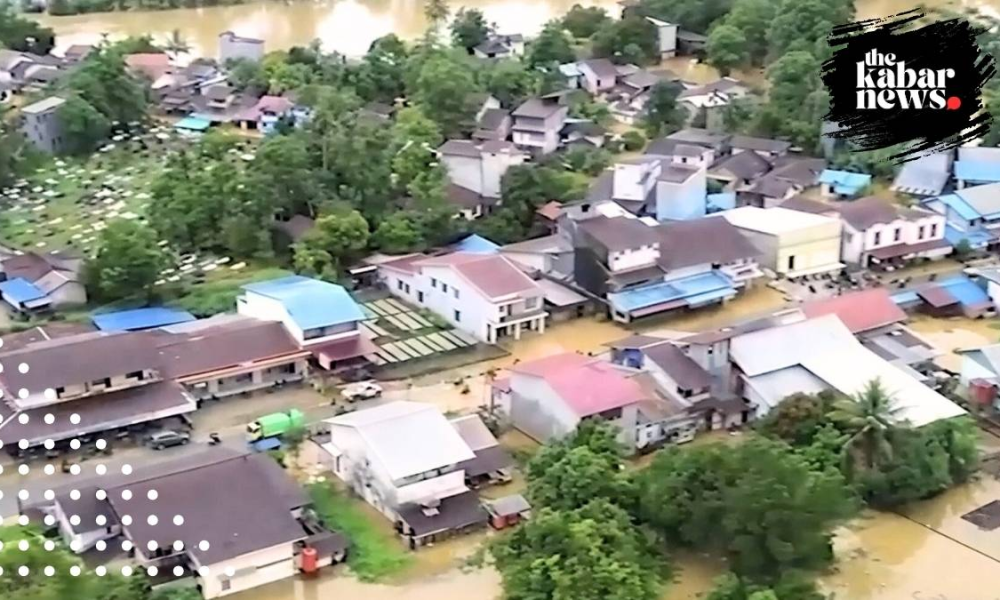
Pontianak, Thekabarnews.com—Severe flooding has hit many cities and regencies in West Kalimantan over the past few days. It has affected thousands of people and made living difficult. Heavy rain that lasts for a long time, mixed with tidal flooding along the coast, has caused widespread flooding and flash floods in many areas.
Daniel, the Daily Coordinator of the West Kalimantan Disaster Management Operations Control Center (Pusdalops PB), reported that the first reports of floods came from Sambas Regency between January 2 and January 5, 2026. The tragedy affected 406 homes, or about 1,724 people, in the villages of Tempapan Hulu and Sajingan in the Galing District.
“Flooding has also happened in Sekadau Regency.” Daniel claimed on Friday, January 9, 2026, that 246 households, or 902 people, were affected in Melati Village alone, with 227 homes underwater.
Floods also devastated Mongko Village in Nanga Taman District, which is in the same regency. They affected 537 houses, or 1,921 people, and flooded 227 homes. In Lembah Beringin Village, Nanga Mahap District, on the other hand, floodwaters affected 417 homes and 1,382 people. Furthermore, 350 homes were completely underwater.
Table Of Content
In Melawi, flash floods and landslides
Flash floods and landslides have also spread to Melawi Regency, affecting Pinoh District. The affected areas included Bata Luar, Maris Permai, Bina Jaya, and Pelita Kenaya.
In Bata Luar Village, 88 households (245 people) were affected. There were 55 households (160 people) impacted in Maris Permai. A total of 120 individuals from 45 households in Bina Jaya were impacted. 51 households, totaling 172 individuals, were impacted in Pelita Kenaya.
Daniel said, “Flash floods also reached Tanah Pinoh Barat District, impacting six villages: Keluas Hulu, Harapan Jaya, Laja, Lintah Taum, Ulak Muid, and Pelita Jaya.”
There were also reports of flooding in the villages of Balai Agas and Upit in Belimbing District and Bemban Permai Village in Ella Hilir District. Local disaster organizations are still working to figure out how many people were affected.
Singkawang experiences coastal flooding
Flooding hit Singkawang in coastal areas, where severe rain and tidal flooding happened at the same time. The Singkawang Disaster Mitigation Agency (BPBD) continues to assess the extent of damage to homes and public buildings.
Daniel underlined how important it is for district and city BPBD to quickly and accurately update data. This ensures both provincial and local governments can respond effectively.
Meteorology, Climatology, and Geophysics Agency (BMKG)’s predictions say that West Kalimantan is still at risk of severe rain in the coming days. He suggested that regional administrations should promptly establish a flood and landslide alert status.
Calls for Disaster Alert Status
The West Kalimantan Disaster Mitigation Agency (BPBD Kalbar) has asked city and regency governments to declare disaster alert status to keep the effects from getting worse.
“With an official alert status, emergency response may be more thorough and involve more people,” Daniel added.
So far, only Mempawah Regency and Ketapang Regency have declared alert status. Mempawah Regency will be on notice until March 11, 2026. Ketapang Regency will be on alert until March 31, 2026.
Officials have also told people who live along riverbanks, on the shore, or in places that are likely to flood to stay alert. They should pack emergency packs with medicines, basic evacuation supplies, and crucial family documents. Community leaders have been told to work with the state electrical provider to turn off the power if flooding reaches homes.
Floods as a natural disaster
Syamhudi, an environmental activist, noted that the floods that keep happening may not be seen as separate natural disasters but as the product of years of poor management of the environment.
“This is the result of bad forest management over many years,” he said.
Syamhudi says that changes in forest ecosystems have made it harder for water to soak into the ground. These changes have messed up drainage systems. He said that traditional stilt buildings show how local communities have adapted to their environment throughout time. However, he also said that local knowledge alone is not enough without robust structural policy.
“If one natural system fails, emergency response must follow. Ecological disasters should not be considered normal seasonal events,” he stressed.
A big effect on society and the economy
The floods have made it very hard for people to do business and socialize. Thousands of homes have been flooded. Highways that go to villages have been blocked, and public buildings are no longer usable. Some people have stayed in their homes, while others have gone to evacuation centers for safety.
BPBD Kalbar response teams, with help from the police, military, and other groups, are still working on evacuations, water patrols, and supply delivery. Local governments are also speeding up the process of declaring an emergency to help more towns that have been affected.






No Comment! Be the first one.