

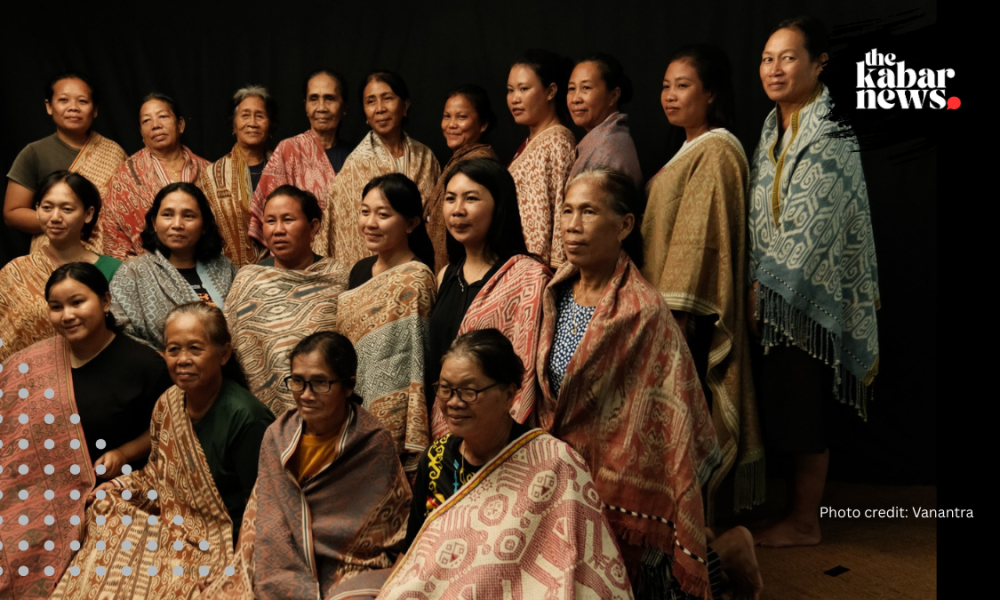
Jakarta, Thekabarnews.com—People in Kapuas Hulu, West Kalimantan, do not often write stories down with ink. The Dayak Iban people weave history, identity, and memory into cloth very carefully. Weaving is more than just a skill; it is a way of life that tells the story of people, their ancestors, and the world around them.
Magareta Mala, one of the people who started the Iban Sadap Weaving Festival, said that weaving is more than just a hobby for us. It is a symbol of identity and an expression of the spiritual, social, and cultural values of the Iban people.
The first Iban Sadap Weaving Festival took place in the middle of December, and that was the idea behind it. The Indigenous Peoples Alliance of the Archipelago/Aliansi Masyarakat Adat Nusantara (AMAN) Kapuas Hulu, Herkulanus Sutomo, said that the festival was a big step in the right direction.
“We want people to know that weaving traditions are still alive, along with the knowledge and values that have been passed down through the years,” he said.
The patterns in Iban Sadap weaving are essential and often tell stories about nature and the spirits of ancestors. Mala said that there are four main ways to weave Iban: kebat, sungkit, pileh, and sidan. One of them is Kebat, which has a special meaning.
“Each kebat pattern has a different meaning and is used for big life events like births and deaths. The patterns show things, animals, and people that stand for something,” she added.
As more people become interested in preservation, Mala and other weavers have made weaving tour plans that meet different needs. Some people only stay for a few days to take notes, but others stay for a long time to learn about the history and methods of Iban Sadap weaving.
A college student from Kuala Lumpur recently spent a lot of time in the village learning how to do things. When they came home, they had both knowledge and a piece of clothing they made themselves.
But the community’s goal is not to get more tourists. It is more important to respect the process. Teaching people how to weave so they understand takes time and work.
Every naturally dyed Iban Sadap tapestry tells a story of indigenous knowledge, protected forests, and flowing rivers.
“We weave while we take care of the land. We do not kill plants that are used to make things. Many of the colors we use are sourced from the woods we frequently visit. We lose our culture when we lose our land,” Sutomo said.
Bamboo looms and plant-based colors come from nature, specifically from leaves, roots, and bark. This freedom makes the people in the community more determined to protect their traditional land. For them, keeping the land safe means keeping the past safe.
Women of all ages weave together in the longhouse, which is a shared home by the river. The longhouse is more than just a place to sleep; it is a way of life. A ruai rumah (customary leader) helps families live together, share values, and get along. The ruai is a big hall where everyone can gather. It is the center of the community. People hold ceremonies there and practice weaving together as a group.
Regeneration is still challenging, but there is still hope. Young weavers like Yosefa Kiki Nayah Sari keep the tradition alive, even though they are very busy.
“It is more fun to weave together in the ruai. I feel like I am in a friendly competition when other people weave,” Yosefa said.
Mala wants other longhouses to see Yosefa as a role model.
“As more young people take part, Iban weaving will continue to grow and keep our ancestral values alive,” Mala said.
The Iban Sadap Weaving Festival 2025 is more than just a gathering; it is a cultural movement that brings people, their ancestors’ wisdom, and nature back together. Weavers make memories, prayers, and the future out of threads.






No Comment! Be the first one.