

A warning from Cilegon: The signal indicates a bigger crisis
Thekabarnews.com—In one part of the industrial city of Cilegon, machines that used to roar all day and night are getting ready to stop. PT Krakatau Osaka Steel (KOS), a joint venture between Krakatau...

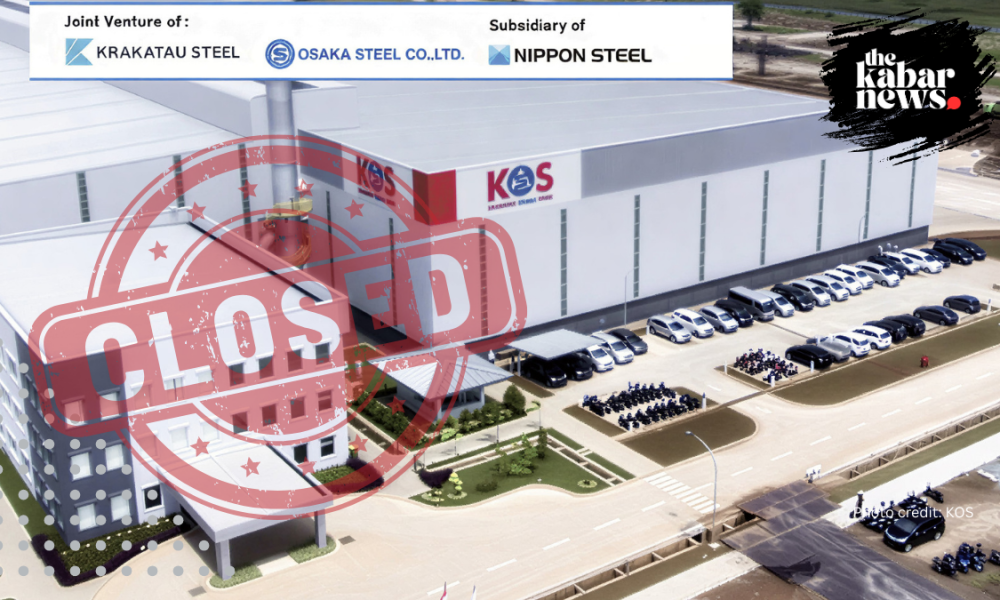
Thekabarnews.com—In one part of the industrial city of Cilegon, machines that used to roar all day and night are getting ready to stop. PT Krakatau Osaka Steel (KOS), a joint venture between Krakatau Steel and Osaka Steel, has said that it will stop doing business by the middle of 2026.
This is not just another business headline. This announcement feels akin to a subtle yet persistent warning sign for Indonesia’s steel industry. KOS has been losing money steadily since 2022. In business, red numbers are warning signs. When factories fail to generate sufficient revenue to cover their expenses, they do not engage in negotiations; instead, they simply shut down.
The fact that Osaka Steel is leaving Indonesia is a negative indication. It is not just about one plant. It has to do with jobs, local supply chains, and the future of manufacturing in the US. Demand for steel in the US has gone down. Infrastructure projects, once the industry’s main income source, are now less common.
At the same time, a lot of cheap, good-quality steel comes into the country. Local businesses are having a difficult time breathing. When imported steel is cheaper than domestic steel, consumers rarely wait.
This is the problem: you have to choose between reduced pricing and protecting the national industry. People who buy things are delighted to see cheaper materials. But what happens when “cheap” means closing factories?
It is not enough to just keep production lines running to save American industry. It means keeping hundreds of thousands of jobs, keeping the economy independent, and making sure that Indonesia doesn’t become completely dependent on foreign supply.
The data show how severe the problem really is. Imports, largely from China, meet about 55% of Indonesia’s steel needs. This implies that imports account for over half of the steel required for constructing homes, workplaces, and bridges.
At the same time, steel plants in the area are only running at 50–60 percent of their full capacity. Low utilization is deadly: firms still have to pay for electricity, labor, and maintenance even though they are making far less than they should be. Losses keep piling up, and then businesses close, just like KOS shows now.
The pinch is harsher when prices go up. Chinese steel comes into Indonesia at very low prices, thanks to huge amounts of production and government subsidies. In other circumstances, prices are even lower than what it costs to make things in Indonesia, which is a classic case of dumping. The government has put anti-dumping taxes in place before, but they have not been enough to make local producers feel safe again.
The damage that goes deeper is mental. In this kind of environment, businesses are too scared to make long-term investments. Osaka Steel and other foreign investors are thinking about whether or not to stay.
A single factory closure can trigger a cascading effect, resulting in job losses for workers, a loss of customers for suppliers, and a loss of regular customers for small businesses near these manufacturers. Industrial decline typically extends beyond the factory gate.
Therefore, we must ask ourselves, which is more crucial: the survival of industry or cheap steel? There is not an effortless answer. Low prices attract construction companies seeking cost savings. But cheap steel can be a trap. When local producers go out of business, imports take over fully. Prices can go up whenever there is no competition.
It is simple to understand. Think about getting eggs from a farmer in your area. One day, a truck pulls up and sells eggs for a lot less. The farmer gives up and loses money. At first, consumers enjoy the low prices, but once the farmer disappears, the truck controls the supply and drives prices up. Buyers pay extra because they have no other choice.
To keep the steel industry going, you do not have to give up free trade. It means making the rules fair. The government can protect both consumers and businesses by setting import limits, raising technical requirements, and ensuring their strict adherence.
At the same time, local manufacturers need to change: they need to get more done, buy better technology, and go into new areas like heavy manufacturing and cars.
KOS reflects the potential consequences of inaction. When even partners from other countries decide to depart, the danger signal intensifies. The country cannot remain quiet. Now is the time for the government, businesses, and society to ask themselves one tough question: Are we willing to give up industrial sovereignty for lower prices?
It is not easy to answer. But there is one true thing. Industrial resilience is not just about what you make; it is also about who you are. A strong country can make its own basic needs, like steel. Such an endeavor is not only possible, but it also requires a robust domestic foundation. When a steel mill shuts down, not only do machines stop working.
They take away a portion of national independence. While affordability is important, it should not take precedence over the importance of independence.
By: PecahTelur
Disclaimer:
This essay is a straightforward examination of business or industrial phenomena designed for public use as a resource for learning or contemplation. This narration is not an academic paper or a journalistic effort, even though it uses several reliable sources.





No Comment! Be the first one.