

Bansos programs will not end poverty; however, this radical income reform could be a solution
Purwokerto, Thekabarnews.com—Indonesia’s social assistance (Bansos) programs have worked like painkillers for decades, relieving symptoms but not curing the problems. Beneficiaries line up for...

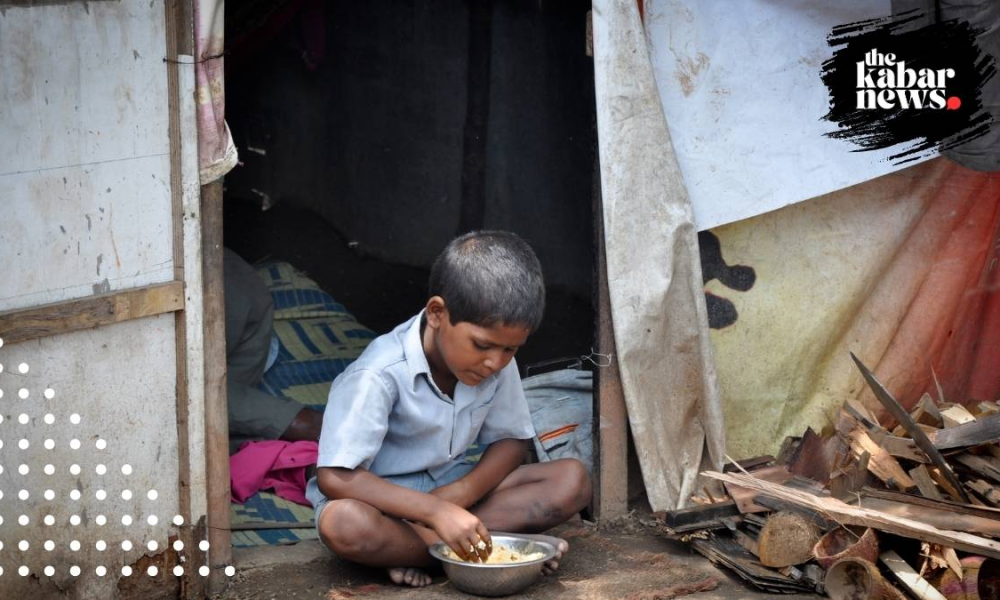
Purwokerto, Thekabarnews.com—Indonesia’s social assistance (Bansos) programs have worked like painkillers for decades, relieving symptoms but not curing the problems. Beneficiaries line up for hours to receive them. Simply put, Bansos save their lives, but survival is not escape.
Indonesia’s poverty alleviation plan is unsustainable. In “Give a Man a Fish: Reflections on the New Politics of Distribution” (2015)—created by anthropologist James Ferguson—social aid is called a new politics of distribution. This strategy involves the state delivering products or cash without a long-term structural change plan.
People in Indonesia need a dramatic, what is that called, “social safety net” makeover that breaks the cycle of poverty—not just manages it.
Effective aid to affirmative basic income, also known as Targeted Basic Income (TBI), perhaps can help their income, but this concept is insufficient for Indonesia to create enduring value. Affirmative basic income (ABI) is needed.
ABI views poverty as a loss of freedom to pursue well-being, not money. The state ensures dignity and opportunity by restoring basic economic capabilities to its citizens through ABI.
Table Of Content
Why ABI is needed
Application of TBI has a chronic problem because Indonesia struggles to include disadvantaged people in official databases—a problem that repeatedly surfaces in Indonesia. Poor program design causes stigma and long-term poverty.
ABI offers a compelling option. The state offers regular cash support to needy populations under this concept, unlike Universal Basic Income (UBI), which benefits everyone, including the wealthy.
Bangladesh and “Cash Plus” lessons
The example of Bangladesh is strong; the Graduation Approach program has lifted 2.3 million ultra-poor households out of poverty since 2002.
Empowerment-driven design, linked with UNICEF’s Cash Plus methodology, makes the initiative successful. Financial aid is more successful when combined with skills training, mentoring, and market access.
ABI similarly rebuilds people’s economic foundation. After recipients “graduate” from poverty, the national tax base grows, allowing the state to expand income security programs.
From charity to rights
Indonesia must switch from charity to rights-based social support. This change is in line with Article 27, Paragraph 2 of the 1945 Constitution, which requires the state to provide “a decent living” for everybody.
In an era of gig work and economic insecurity, only basic income security can guarantee social protection.
Where would money come from?
A dynamic and precise data system is needed to target the lower 40% of income earners for ABI.
According to March 2025 figures, 9.54 million of Indonesia’s 23.85 million poor are in this group. An ABI of Rp75 million per recipient would cost Rp715.5 trillion, or 21% of the State Revenue and Expenditure Budget (APBN).
We have exceeded the planned 2026 social assistance budget of Rp508 trillion. Given Indonesia’s expanding economy, ABI is sometimes called “fiscal suicide.”
President Prabowo Subianto’s free meals program (MBG), which costs Rp335 trillion this year, fuels mistrust. If MBG is a physical investment, ABI is a social investment with long-term economic gains.
Two excellent funding options are, first, recovery from natural resource corruption losses and second, wealth taxes and the multiplier effect.
Former Coordinating Minister for Politics, Legal, and Security Affairs Mahfud Md showed how much corruption takes from state revenue. He believed that eliminating corruption in natural resource sectors, especially mining, would allow every Indonesian to earn Rp20 million per month.
This is illustrative, but the main point is clear: Indonesia has the financial resources to address poverty. ABI might get Rp715.5 trillion yearly if the Prabowo administration truly stops revenue leaks in the mining, forestry, and maritime sectors.
The economist Thomas Piketty has long proposed progressive wealth taxes to decrease inequality. With lower-income groups’ strong Marginal Propensity to Consume (MPC), ABI funds would quickly return to the real economy, providing powerful multiplier effects. ABI might boost Indonesia’s tax ratio and minimize inequality by taxing wealth.
Debunking the laziness myth
The primary complaint of cash aid is that it encourages sloth. The data disagrees. A meta-analysis in 2010 indicated that cash transfers tend to promote workforce participation in poor nations. Poor families spend money on transit to job markets or micro-businesses, not laziness.
ABI’s affirmative design can link assistance to productive engagement, dispelling the dependency myth and confronting the state’s social policy inertia.
Indonesia requires a new social compact. Affirmative Basic Income is a logical, financially viable policy synthesis funded by the nation’s natural wealth. With political will, ABI is no longer a utopia. It demonstrates social justice for all Indonesians.
Written by: Barid Hardiyanto, Lecturer, Nahdlatul Ulama University of Purwokerto (UNU Purwokerto)





No Comment! Be the first one.