

Asia’s divorce map 2025: South Korea, China, and Japan record the highest rates
Thekabarnews.com—The fact that divorce rates are different in different Asian countries shows that they are not the same. This statistic shows that families in the area are changing due to lifestyle...

Thekabarnews.com—The fact that divorce rates are different in different Asian countries shows that they are not the same. This statistic shows that families in the area are changing due to lifestyle changes, societal dynamics, and financial concerns.
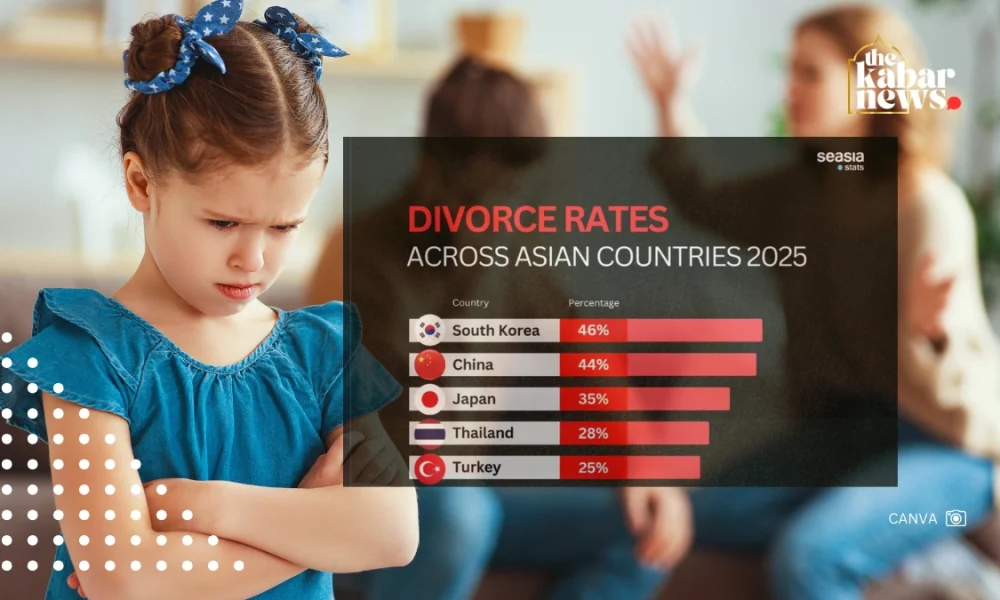
South Korea had the most divorces of any Asian country in 2025. 46 percent of marriages ended in divorce. This trend is happening because cities like Seoul are growing quickly. Additionally, jobs are stressful, and people’s ideas about marriage are changing.
Over time, the rules for marriage have changed. The increase is because wives are more stressed out at work now and have different ideas about how to live at home, which may include seeking more equality in household responsibilities and prioritizing personal fulfillment over traditional roles.
This situation has led to a reevaluation of traditional marriage roles and expectations. As a result, it contributes to the rising divorce rates observed in cities like Shanghai and Beijing.
The US has the highest divorce rate in Asia, and China has the second highest at 44 percent. The trend is most obvious in big, modern cities like Shanghai and Beijing. In these places, things happen quickly.
People’s views on marriage and long-term relationships have changed. The cost of living is going up, it is getting harder to find work, and younger people are becoming more financially independent. These changes have affected attitudes towards marriage.
Japan has the third-highest divorce rate in the world, at 35 percent. The same thing is happening in other industrialized East Asian countries. Families in big cities like Osaka and Tokyo are very different now than they used to be.
This shift is due to changing social norms. These norms lead to increased expectations for work-life balance, which makes it challenging for families in urban areas to find this balance, particularly as they navigate the pressures of modern employment and family responsibilities.
As a result, married couples who prioritize their happiness and work longer hours may experience increased stress from the demands of both their professional and personal lives.
Married couples who prioritize their happiness and work longer hours may experience increased stress.
People in East Asia’s highly urbanized and industrialized countries marry in very different ways. This pattern is true in China, Japan, and South Korea. People are becoming more honest about how they feel about being married and divorced as cities and economies grow.
There are fewer divorces in Southeast Asia, but as cities grow, more people are getting divorced. In Thailand, 28 percent of marriages end in divorce. In cities like Bangkok, where industrialization and the need for money make family life hard, these trends are easy to see.
At the same time, Malaysia says 8 percent, Vietnam says 7 percent, and Indonesia says 6 percent. Family life is gradually evolving in major cities like Jakarta, Ho Chi Minh City, and Kuala Lumpur.
But cultural and religious rules still have a big impact on how long marriages last. These rules influence factors such as the acceptance of divorce and the societal expectations placed on couples. The effects can vary significantly across different regions and cultures in Asia.
India has one of the lowest divorce rates in all of Asia. One out of every hundred marriages ends in divorce. Most people in this area want more stability than the average. In many parts of the country, strong family ties, social norms about marriage, and cultural norms help keep many marriages together.
Recent research indicates that the diverse cultural traditions in Asia influence the stability of marriages and the frequency of divorces. Some traditions encourage long-lasting marriages, while others may lead to more divorces.
These changes affect how people meet and stay in touch, which can change how many marriages last and how many end in divorce. But things like planned weddings and being close to your community still help keep marriages strong. Such factors foster support networks and shared values that contribute to relationship stability.







No Comment! Be the first one.