

Lavrov says some Arab leaders fear US more than God, triggering global reaction
Thekabarnews.com—Russian Foreign Minister Sergey Lavrov says that some Arab leaders are more afraid of the US than they are of their convictions. This suggests that external pressures may heavily...

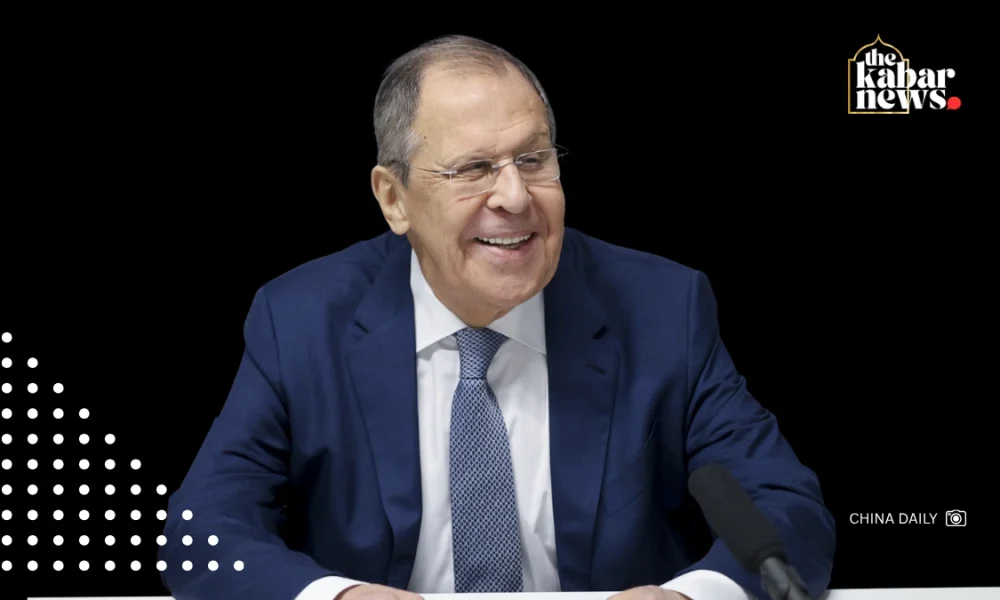
Thekabarnews.com—Russian Foreign Minister Sergey Lavrov says that some Arab leaders are more afraid of the US than they are of their convictions. This suggests that external pressures may heavily influence their political decisions rather than their own beliefs or the needs of their people. People around the world are showing strong interest in this topic.
Many people around the world, especially in Arab countries, are expressing frustration with Sergey Lavrov. This anger grows as things are getting worse due to the ongoing conflicts and the perceived alignment of their leaders with US interests.
Lavrov also said that Washington’s political pressure has changed how many states think about the issue between Israel and Palestine. Their ties with Iran also suffer as a result. He made this statement when the area was still dangerous.
Lavrov thinks that certain politicians tend to put their own political goals ahead of what they have always believed.
“Many Arab leaders seem more scared of Donald Trump than they are of God,” he said.
Many individuals were upset by what he stated. This comment quickly got the attention of journalists and diplomats from all across the world.
Some people thought what he said was rude. However, it also indicates that people worry about how external forces shape policies in the Middle East and shift the balance of power.
Lavrov also said that countries can change their thoughts if the big powers put enough pressure on them. These kinds of comments could make them change their minds about important pledges they made in the area.
These kinds of changes are becoming clear as tensions rise between the US, Iran, and Israel. This phenomenon is especially true when it comes to how countries could change their affiliations or plans. They adjust when they feel pressure from bigger powers.
Lavrov also said that Russia still stands by Iran, just like it stands by its friends. He stressed that Russia would not leave its partners behind.
These remarks showed that Russia was firmly on the side of its partners as things got worse in the area. The situation especially includes rising tensions between Iran, Israel, and the US.
“Russia would never leave its friends behind,” Lavrov said. This statement makes it plain that Moscow truly wants to keep its strategic partnerships in the area.
People have different thoughts about what he said. Some people resent it when local leaders switch parties and break their promises. Some people believe that Russia uses this narrative to portray itself as a trustworthy partner in an uncertain world.
They also argue that this approach harms genuine diplomatic efforts and could further destabilize international relations. This argument is particularly true in regions like the Middle East, where trust and reliability are essential for effective negotiations.
The remarks also intensify a long-running debate in the Middle East over who should lead and who has the right to influence change from outside the region.
The world is so bad that governments must compromise their religious views or diplomatic relations to meet their people’s needs.
People are paying more attention to political leaders as tensions grow. People in the area are increasingly watching how their leaders respond to outside criticism and whether they uphold cultural and national ideals.
Leaders often show how powerful they are when things go wrong. This is especially true during a crisis when their decisions can have a giant effect on public trust and national unity.
“Real leadership is tested not in stable times, but when core principles are challenged,” a local resident said.
Lavrov’s statement, which is controversial, has added a new level to the conversation about power, influence, and accountability in world politics. This assertion is especially true in a part of the world where rivalries are still defining the future.




No Comment! Be the first one.