

Apparently, MBG comes first, and jobs can wait
Thekabarnews.com—Please be patient, people who are still jobless. The government does not care about you as much as other things. The free meals program (MBG) is currently the main focus. Creating...

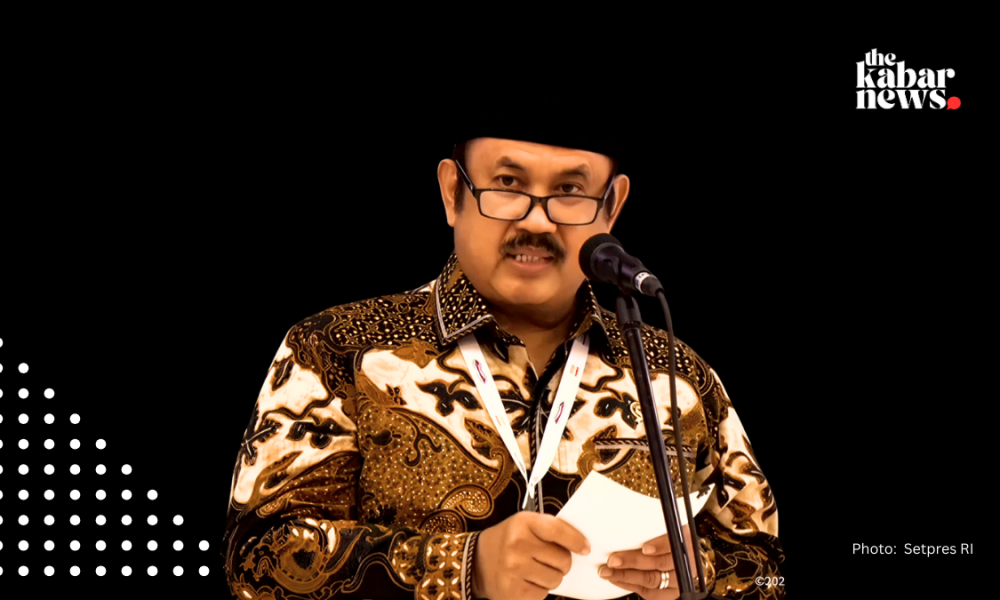
Thekabarnews.com—Please be patient, people who are still jobless. The government does not care about you as much as other things. The free meals program (MBG) is currently the main focus. Creating jobs? We can wait for it. Read the narration carefully while you drink a cup of sugarless coffee (Koptagul), buddy!
This country has finally found a new order of development priorities: eat first—then work, or better yet—not work at all. The National Development Planning Ministry/National Development Planning Board (Bappenas), Rachmat Pambudy, said calmly that the MBG program is more important than creating jobs. It’s not that the MBG program is more important; it’s simply more urgent. His choice of words was miraculous, capable of transforming economic reasoning into a form of free verse poetry.
Rachmat made this speech at the Prasasti Economic Forum 2026 in Jakarta’s SCBD, Thursday, January 29. He presented a classic example to the public there: instead of giving people fishing rods, give them fish. If you give them rods, they might perish before they catch anything. The rationale is kind and touching, making it a wonderful choice for a policy poster. It misses one tiny point: people are still hungry when the fish runs out, and the fishing pole never shows up.
“People are starving in distant villages,” he said. His statement is a powerful assertion, steeped in emotion, and challenging to validate. What villages, hamlets, districts, or provinces are these people referring to? Are these distant villages genuine places, or are they made-up places that live in the same area as “the common people” and “irresponsible actors”? There are more cameras than power lines in this country; thus, it is remarkable that there are not any national headlines concerning widespread famine. There is no breaking news, live reports, or addresses—only rehashed stories from one podium to another.
This is a moral issue if Indonesians are really starving and not merely skipping lunch. It is a moral condemnation. What kind of country has economic forums with air conditioning in SCBD while letting unidentified people slowly perish in communities that are not visible? But Indonesia has never said there is a hunger emergency. Instead, the government seems eager to fix budget allocations and political framing right away. It is funny that the state even sends food aid to other countries.
At the same time, the government quietly ignores facts with real addresses. By early 2026, Indonesia has around 7.4 to 7.5 million unemployed people, and the open unemployment rate stands at 4.8 to 4.9%. These figures remain relatively consistent with August 2025, when BPS reported 7.46 million unemployed people and an unemployment rate of 4.85%. The World Economic Forum has even said that unemployment is the largest economic threat to Indonesia from 2026 to 2028. However, there is no need to worry—this threat does not lead to “starvation,” at least not in official terms.
We have yet to fully utilize the potential of the demographic dividend. The job market is getting weaker. New graduates line up at the gates of industries that go smaller every year. Layoffs are still happening. Automation and digitalization continue to progress without the need for traditional lunch breaks. BPS, Trading Economics, and international organizations have all written about all of this.
This group of unemployed people is ironically the most likely to be hungry without saying anything. They only get one meal a day, the food is not very nutritious, their kids are getting shorter, and their brains are getting slower. This situation makes the country wonder why its human capital is falling behind.
The thinking behind policy gets more creative every day. The government treats unemployed people as if they can wait for jobs, as if they only need oxygen and motivation to survive. The government provides food to people today, but this delays the creation of jobs that would prevent hunger in the future. It is akin to attempting to extinguish a fire with a fan while claiming, “At least it feels cooler at the moment.”
People still remember the 2024 presidential campaign quite well. Gibran Rakabuming Raka pledged 19 million new jobs, including 5 million green jobs, based on the energy transition, MSMEs, and a green future.
The administration says that the realization will still be “gradual” by early 2026—five years. Some people say there has been no progress, while others are doubtful. But it is okay. You can wait for promises. But MBG can’t.
So we reach a bitter yet fulfilling conclusion: the government gives fish to a country where ponds are dry, fishermen have no jobs, and fishing rods remain stuck in schools. The government urges adults to remain patient while it feeds children. It ignores detailed unemployment data and instead uses hunger narratives without specific addresses.
By: Rosadi Jamani, Chairman of Satupena West Kalimantan.







No Comment! Be the first one.