

Aisha Mustafa explores quantum-based concept for fuel-free space propulsion
Thekabarnews.com—A young physicist from Egypt has come up with an idea that could make it possible to power spacecraft without using regular fuel systems. People in every part of the world are...

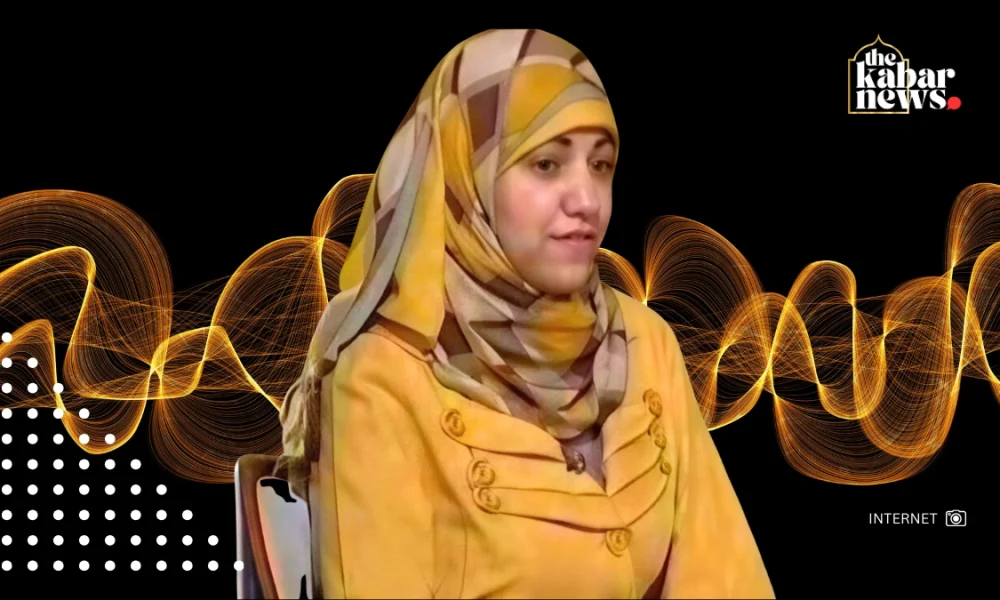
Thekabarnews.com—A young physicist from Egypt has come up with an idea that could make it possible to power spacecraft without using regular fuel systems. People in every part of the world are talking about it.
Aisha Mustafa, 19, introduced a method for propulsion that incorporates concepts from quantum physics. She uses quantum entanglement and manipulation of particles to make thrust without using regular fuel systems.
Her research is about finding new ways to make thrust without using fuel, like using electromagnetic fields or other creative methods that could change the way propulsion works, such as utilizing quantum effects to enhance efficiency and reduce reliance on traditional fuel sources.
Scientists are talking about the future of spacecraft technology and traveling long distances in space because the idea is still just a theory.
Most spacecraft today use propulsion systems that push out mass to move forward. Chemical rockets need a lot of fuel to move, but electric propulsion systems use charged particles to do the same thing.
Space missions have relied on these technologies for a long time, but they do have some drawbacks.
Spacecraft are heavier because they need fuel. These changes can make missions shorter and closer to home. Scientists are still looking for better ways to move things around in space. For example, they are working on advanced propulsion systems that could use less fuel.
Scientists believe that spacecraft could travel farther and stay in space longer if they used engines that worked differently, like those that used electromagnetic propulsion systems or other advanced physics ideas that do not need traditional fuel sources.
Physicists and aerospace engineers have long studied the concept of fuel-free propulsion. There are now a few theoretical approaches that use advanced physics ideas, such as electromagnetic propulsion systems and experimental drive concepts.
But a lot of these thoughts are still very new. Scientists say any new propulsion technology must follow the laws of physics, especially the law of conservation of energy.
Scientists usually test new propulsion theories a lot before they think about using them in real life because the rules are so strict.
People who work in aerospace say that new ideas for propulsion have to go through a strict process.
Researchers usually have to do peer reviews, computer simulations, and lab tests for years to make sure that new ideas are scientifically sound.
Many experimental propulsion ideas have not worked yet, but learning about theories is still a beneficial way to learn more about science.
Researchers say the work of young scientists like Mustafa reflects growing global interest in advanced propulsion technologies.
Even wrong ideas can help us understand complex scientific problems better and see things in a new way because they can question established ideas and spark new ways of thinking about propulsion technologies.
Scientists are still looking for new ways to move spacecraft that could change how people travel in space. This progress is happening because both space agencies and private companies are planning bigger and harder missions to deep space.
New discoveries in fields like quantum physics could one day lead to tools that help us see space better from far away, like advanced telescopes or imaging technologies that help us learn more about distant celestial bodies.







No Comment! Be the first one.